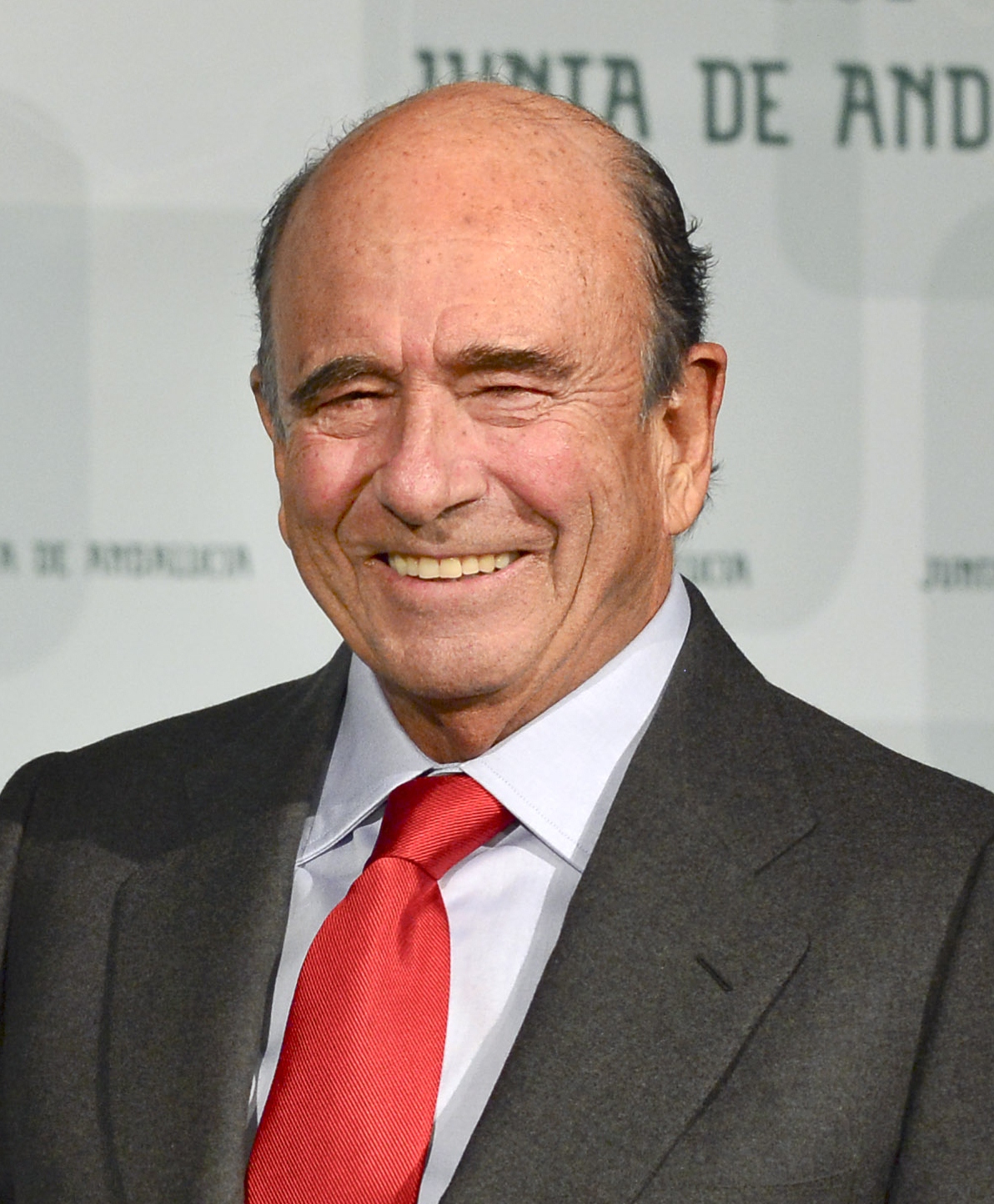
Emilio Botín: The Visionary Architect Behind Santander's Global Ascent
Emilio Botín, a name synonymous with audacious banking and relentless expansion, steered Grupo Santander from a prominent Spanish institution to a formidable global financial powerhouse. For decades, his strategic vision and unwavering drive defined the trajectory of one of the world's largest banks. While discussions often gravitate towards the sheer scale of his achievements, understanding
Emilio Botín's net worth offers a compelling snapshot of a career marked by bold mergers, international acquisitions, and an insatiable appetite for growth. At an estimated $1.1 billion, his wealth wasn't merely a personal fortune; it was a testament to the colossal enterprise he built and led.
Born into a venerable banking dynasty, Botín’s leadership transcended traditional finance, transforming Santander into a diversified entity with an unparalleled international footprint. His story is not just about accumulating wealth, but about the profound impact of a single individual's strategic genius on the global financial landscape.
A Banking Scion's Early Ascendancy and Ambitious Vision
Emilio Botín-Sanz de Sautuola y García de los Ríos, born on October 1, 1934, in Santander, Cantabria, Spain, was a fourth-generation banker. The world of finance wasn't just his profession; it was his inheritance, his destiny, and ultimately, his canvas for monumental change. This deep-rooted connection to banking provided him with an inherent understanding of the industry, but it was his distinct vision that truly set him apart.
He formally took the helm as Executive Chairman of Spain’s Grupo Santander in 1986. At this juncture, Spain was a country on the cusp of significant economic transformation, integrating more deeply into Europe. Botín saw beyond the national borders, envisioning a financial institution that could compete on a global stage. His leadership was characterized by an almost obsessive focus on growth and performance, often described as an iron will tempered by a hands-on approach, including famously regular visits to bank branches. This grounded perspective, combined with an ambitious strategic outlook, laid the groundwork for the extraordinary expansion that was to follow. His early moves were not just about increasing assets, but about building a resilient, adaptable structure capable of absorbing and integrating new entities.
Engineering Global Expansion: Santander's Strategic Acquisitions and Mergers
Botín's tenure at Santander was a masterclass in strategic mergers and acquisitions, each move carefully calculated to enhance the bank’s market position and expand its reach. His strategy wasn't about cautious increments; it was about audacious leaps.
The first major consolidation under his leadership came in 1993 with the absorption of Banco Español de Crédito (Banesto). This move was significant, signaling Santander's intent to dominate the Spanish market. But Botín’s ambitions stretched further. In 1999, Santander merged with Banco Central Hispano, creating Banco Santander Central Hispano (BSCH). This landmark merger instantly made BSCH Spain’s largest bank, a dominant force in its home market. While he initially shared co-presidency with Central Hispano’s José María Amusategui, Botín’s influence remained paramount, eventually taking full reins after Amusategui's retirement in 2002.
The turn of the millennium saw Botín cast his gaze internationally with even greater resolve. A pivotal moment arrived in 2004 with the acquisition of the British bank, Abbey National. This move was revolutionary, immediately catapulting BSCH to become the second-largest bank in Europe by market capitalization. It wasn't just about size; it was about strategically embedding Santander into a mature and highly competitive European market, providing a stable revenue base beyond Spain.
Botín's global vision also recognized the immense potential of emerging markets. Santander had established an early presence in Latin America, a foresight that paid substantial dividends. By the 2010s, banks in the region contributed an astounding 51% to Santander's overall profits, demonstrating the power of geographical diversification and early market entry. Today, Santander boasts over 13,000 branches worldwide, including a significant presence in the U.S. through Sovereign Bank and, of course, a robust network across the UK. This extensive international footprint directly contributed to the substantial figure of
Emilio Botín's net worth, reflecting his success in creating a truly global banking enterprise. For a deeper dive into the specific components that built his wealth, consider reading
Unpacking Emilio Botin's $1.1 Billion Net Worth and Banking Empire.
Navigating Economic Headwinds and Financial Complexities
Even a banking titan like Emilio Botín faced significant challenges, particularly during periods of economic turbulence. The global financial crisis and the subsequent sovereign debt crisis in Europe deeply impacted even the most robust institutions. In 2011, for instance, Santander reported net profits of $7.1 billion. While an impressive sum, this represented a substantial 36.4% drop over the previous year. This decline was largely attributed to the severe downturn in the Spanish economy and the continued fall in real estate prices, which had a widespread effect across the financial sector.
In response to these market realities, Botín's leadership required tough decisions. Santander undertook significant write-downs, including $2.4 billion in Spanish real estate and an additional $792 million in Portuguese goodwill. These actions, though painful, were crucial for de-risking the bank’s balance sheet and positioning it for future recovery.
However, Botín's illustrious career was not without its controversies. In 2011, the Botín family faced accusations of tax evasion related to a secret Swiss bank account of undisclosed size. To avoid charges, the family paid a hefty penalty of $264.2 million. This incident served as a stark reminder of the complexities and ethical challenges that can accompany immense wealth and power, even for figures as publicly prominent as Botín. It highlighted the delicate balance between driving aggressive corporate growth and adhering to stringent financial regulations. To understand more about these financial challenges and the controversies that arose, explore
Emilio Botin's Net Worth: Navigating Bank Profits and Tax Evasion.
The Legacy of a Visionary: Growth, Performance, and a Global Footprint
Emilio Botín's legacy is firmly etched in the annals of global finance. His unrelenting "obsession with growth and performance" was not just a personal mantra but a philosophy he instilled throughout Santander. This focus earned the bank significant accolades, most notably being named the "Best Bank in the World" by Euromoney magazine in July 2008 – a recognition that underscored its remarkable resilience and innovative strategies even as global financial markets teetered on the brink.
By March 2012, Botín himself was ranked #1075 in The Forbes Billionaires list and #12 in Spain, figures that unequivocally underscored the scale of his personal fortune derived from his exceptional career. More than just personal wealth, his ultimate achievement was transforming a regional bank into a transnational giant, setting a benchmark for international banking strategy.
Botín's foresight extended to succession planning as well. His daughter, Ana Botín, widely recognized as his apparent heir, had already begun making her mark by running Banesto, the bank's retail branch, before eventually taking over the reins of the entire Grupo Santander. This continuation of a banking dynasty, under a new generation, speaks to the deep-seated values and strategic foundations that Emilio Botín meticulously laid. His impact was not merely about capital accumulation; it was about creating an enduring institution capable of adapting and thriving in an ever-evolving global economy.
Conclusion
Emilio Botín’s life was a masterclass in strategic vision, relentless execution, and profound leadership within the financial sector. His estimated
Emilio Botín net worth of $1.1 billion serves as a powerful symbol of his monumental achievements. From inheriting a family legacy to orchestrating a series of daring mergers and acquisitions, he fundamentally reshaped Grupo Santander into a global banking colossus with a presence in every major market. Despite navigating economic downturns and facing significant controversies, Botín's unwavering commitment to growth and performance left an indelible mark on the financial world. His legacy endures not only in the vast network of Santander's global branches but also in the strategic blueprint he provided for future leaders, demonstrating how a single, determined vision can transform an industry and build an empire.