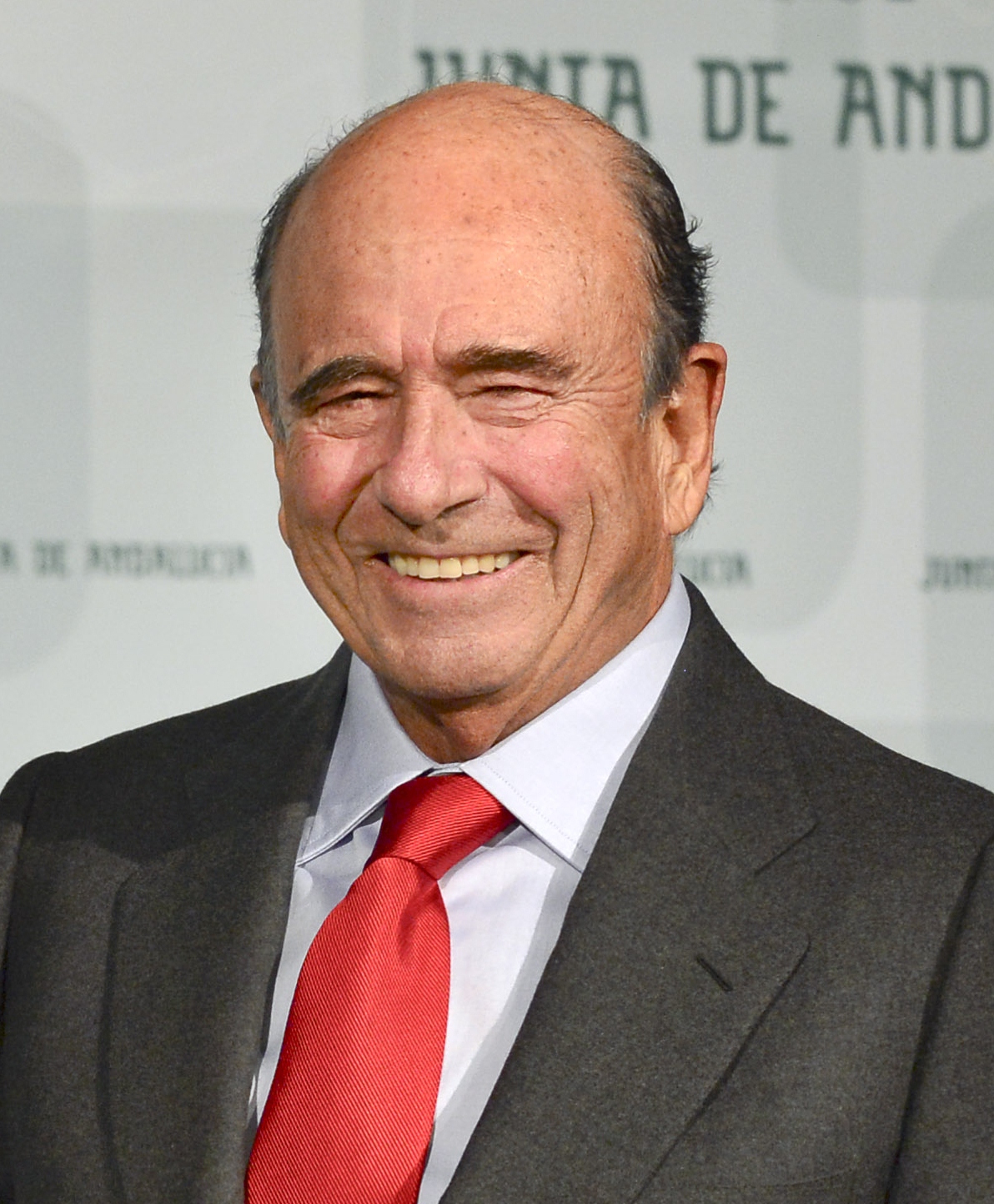
Emilio Botin's Net Worth: Navigating Bank Profits and the Shadow of Tax Evasion
Emilio Botin, the venerable Spanish banking scion, carved out an indelible legacy in the world of finance, transforming a regional bank into a global powerhouse. At the time of his passing, his estimated
emilio botin net worth stood at an impressive $1.1 billion, a testament to decades of relentless expansion and strategic acumen at the helm of Grupo Santander. This article delves into the journey of the fourth-generation banker, exploring how he amassed such significant wealth, the economic forces that shaped his empire, and the controversies, including allegations of tax evasion, that occasionally shadowed his otherwise glittering career.
The Architect of a Banking Giant: Emilio Botin's Strategic Rise
Born Emilio Botín-Sanz de Sautuola y García de los Ríos on October 1, 1934, in Santander, Cantabria, Spain, Emilio Botin was steeped in banking from birth. The eldest of two sons, he inherited a profound understanding of finance and an inherent drive for growth. His ascent to power began in earnest when he took the reins as Executive Chairman of Spain’s Grupo Santander in 1986. Under his leadership, Santander embarked on an aggressive expansion strategy that would redefine its scale and influence.
Botin's vision for growth was marked by a series of audacious mergers and acquisitions. In 1993, Santander absorbed Banco Español de Crédito (Banesto), a significant move that consolidated its position in the Spanish market. The momentum continued in 1999 with the monumental merger with Banco Central Hispano, creating Banco Santander Central Hispano (BSCH). This newly formed entity immediately became Spain's largest bank, a testament to Botin's strategic foresight and his ability to navigate complex corporate integrations. He co-presided over BSCH with Central Hispano’s José María Amusategui until Amusategui's retirement in 2002, solidifying Botin's singular control.
The ambition didn't stop at national borders. In 2004, BSCH acquired the British bank Abbey National, a move that propelled the institution onto the European stage, making it the second-largest bank in Europe by market capitalization. This aggressive internationalization strategy saw Santander establish a presence across the globe, including key markets in the U.S. through Sovereign Bank, and a substantial footprint in the UK. Perhaps most strategically, the bank's early and consistent presence in Latin America proved incredibly lucrative, with banks in the region contributing a staggering 51% to Santander's profits. Botin was renowned for his obsession with growth and performance, often making unannounced visits to bank branches to ensure operational excellence and to connect directly with the ground reality. His dedication and strategic genius earned him significant accolades, including Euromoney magazine naming Santander the "Best Bank in the World" in July 2008.
Unpacking Emilio Botin's Net Worth: A Billion-Dollar Legacy
The estimated
emilio botin net worth of $1.1 billion was a direct reflection of his lifelong career at the pinnacle of global finance. This substantial wealth was accumulated primarily through his executive compensation, shareholdings in the expanding banking empire, and strategic investments over nearly three decades. However, even titans of industry are not immune to economic headwinds.
The year 2011 presented significant challenges for Santander and, by extension, for the trajectory of Botin's financial empire. The global financial crisis and the subsequent downturn in the Spanish economy, coupled with falling real estate prices, led to a substantial drop in the bank's profitability. Santander posted $7.1 billion in net profits that year, a significant 36.4% decrease from the previous year. In response to the deteriorating economic climate, Botin's leadership mandated considerable write-downs: $2.4 billion in Spanish real estate assets and an additional $792 million in Portuguese goodwill. These figures underscore the immense scale of the bank's operations and the profound impact of national economies on global financial institutions.
Despite these challenges, Botin remained a fixture on global wealth rankings. As of March 2012, Forbes listed him as #1075 among the world's billionaires and the #12 richest individual in Spain, highlighting the enduring strength of his financial standing even amidst economic volatility. A crucial aspect of Botin's legacy, and a testament to the family's deep roots in banking, is his daughter Ana Botin, who has emerged as a powerful figure in her own right. At the time, she was running Banesto, the bank’s retail branch, and was widely considered her father's heir apparent, a role she would later formally assume as the Executive Chairman of Banco Santander. For a deeper dive into the specific components of his wealth and the mechanics of his banking empire, you can read more here:
Unpacking Emilio Botin's $1.1 Billion Net Worth and Banking Empire.
The Shadow of Controversy: Tax Evasion Allegations
While Emilio Botin's name became synonymous with banking success and global expansion, his journey was not without its shadows. In 2011, a significant controversy emerged that cast a cloud over his family's impeccable financial reputation: allegations of tax evasion. It was revealed that the Botin family had maintained a secret Swiss bank account, the size of which remained undisclosed. To avoid charges related to these tax irregularities, the family was compelled to pay a substantial penalty of $264.2 million.
This incident served as a stark reminder that even the most powerful figures in finance are subject to legal scrutiny and that the pursuit of wealth can sometimes lead to ethically dubious practices. The revelations sent ripples through the Spanish financial community and beyond, underscoring the ongoing challenges of financial transparency and corporate governance, particularly for high-net-worth individuals and influential families. Such controversies often erode public trust in banking institutions and their leaders, making the call for greater accountability louder. For any individual or business, the importance of adhering to tax laws and maintaining absolute financial transparency cannot be overstated. Beyond legal ramifications, the reputational damage can be severe and long-lasting, influencing public perception and investor confidence.
Beyond the Billions: Emilio Botin's Enduring Influence and Banking Philosophy
Emilio Botin's impact on Spanish and global banking extends far beyond his personal fortune. He was a visionary leader who fundamentally reshaped the landscape of European banking. His philosophy was rooted in an unyielding drive for growth, a focus on performance metrics, and a hands-on approach to leadership, exemplified by his regular visits to branches worldwide. He believed in constant evolution and adaptation, a strategy that allowed Santander to weather numerous financial storms and emerge stronger.
His legacy is not merely in the financial figures or the sheer size of the bank he built but also in the institutional culture he fostered and the global blueprint he laid down. The continuity of his vision is most powerfully seen in the leadership of his daughter, Ana Botin, who continues to steer Banco Santander with a similar blend of ambition and strategic foresight. Her ascension ensures that the Botin family's influence on global finance, through one of the world's largest banks, remains undiminished. Emilio Botin demonstrated how a single individual's strategic vision could transform a national entity into a multinational behemoth, leaving an indelible mark on how banking is conducted across continents. To explore more about the strategic brilliance behind Santander's global expansion under his guidance, consider reading:
Emilio Botin: The Billionaire Banker Behind Santander's Global Rise.
Conclusion
Emilio Botin's life was a masterclass in banking, characterized by ambitious expansion, astute financial management, and an unwavering commitment to growth that elevated his
emilio botin net worth to over a billion dollars. He transformed Grupo Santander into a global banking giant, leaving an enduring legacy of strategic mergers and international diversification. While his career was lauded with accolades, it also faced challenges from economic downturns and the significant stain of tax evasion allegations. Ultimately, Botin's story is a complex tapestry of unparalleled professional achievement, immense wealth, and the ever-present scrutiny that comes with wielding such power and influence in the global financial arena.